We develop technology-driven solutions for motor and cognitive assessment, rehabilitation, and assistive care. Our work combines biomechanics, digital health, human-machine interaction, and rehabilitation engineering to address real-world clinical challenges.

Occupational Therapy
Department
Our work spans kinematics, muscle activity, balance, assistive technology design, and digital rehabilitation tools.
Applying motion analysis to investigate human biomechanics, the effects of misleading feedback on motor performance and learning, and the development of assistive technologies for individuals with visual impairments.
Recording and analyzing electromyographic signals to evaluate neuromuscular function, guide rehabilitation strategies, and enable the control of robotic and assistive systems through muscle-derived data.
Investigating balance control as well as tactile and haptic feedback technologies for sensory augmentation, sensory threshold assessment, and human-machine interaction.
Designing assistive technologies, splints, and clinician-friendly software that translates patient measurements into personalized device models, making custom fabrication accessible to occupational therapists without specialized CAD expertise.
Designing accurate and accessible digital assessment tools that evaluate executive functions in real-world contexts, enabling participation by individuals with cognitive impairments.
Principal Investigator
Occupational Therapy Dept. (Room 326) · Gray Faculty of Medical and Health Sciences
Tel Aviv University · Ramat-Aviv, Tel-Aviv 69978, Israel
Prof. Sigal Portnoy is an electronics engineer who completed her M.Sc. and Ph.D. in Biomedical Engineering at Tel Aviv University. In 2009, she established the Hadassah Gait and Motion Laboratory in Jerusalem and served as its Scientific Director until 2017. During this time, she led numerous research projects aimed at quantifying the effects of various treatment approaches and clinical procedures on movement patterns in patients with motor disabilities resulting from neurological and orthopedic impairments.
In October 2012, Prof. Portnoy joined the Department of Occupational Therapy at Tel Aviv University. Her research focuses on identifying and analyzing factors that influence motor and cognitive function in both healthy individuals and people with motor or cognitive disabilities. In addition, she develops innovative computerized tools for the assessment and rehabilitation of individuals with motor and cognitive impairments.
Prof. Portnoy served as Chair of the Department of Occupational Therapy from 2021 to 2025.
Computerized assessment tools developed by our lab, made freely available for clinical use.
Developed by: Debbie Rand & Sigal Portnoy · Department of Occupational Therapy, Tel Aviv University
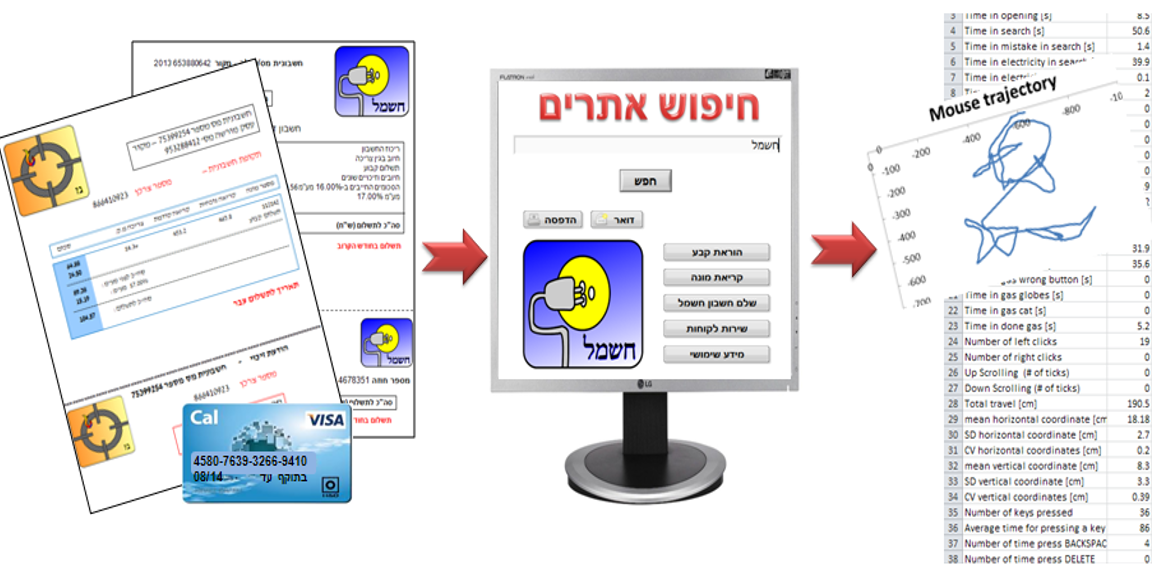
An internet-based, computerized version of the bill-paying task from the Executive Function Performance Test, allowing remote administration and automated scoring of everyday executive-function performance.
💻 Windows PC only
Developed by: Debbie Rand, Sigal Portnoy, Rachel Kizony & Sivan Keidar Latar · Department of Occupational Therapy, Tel Aviv University
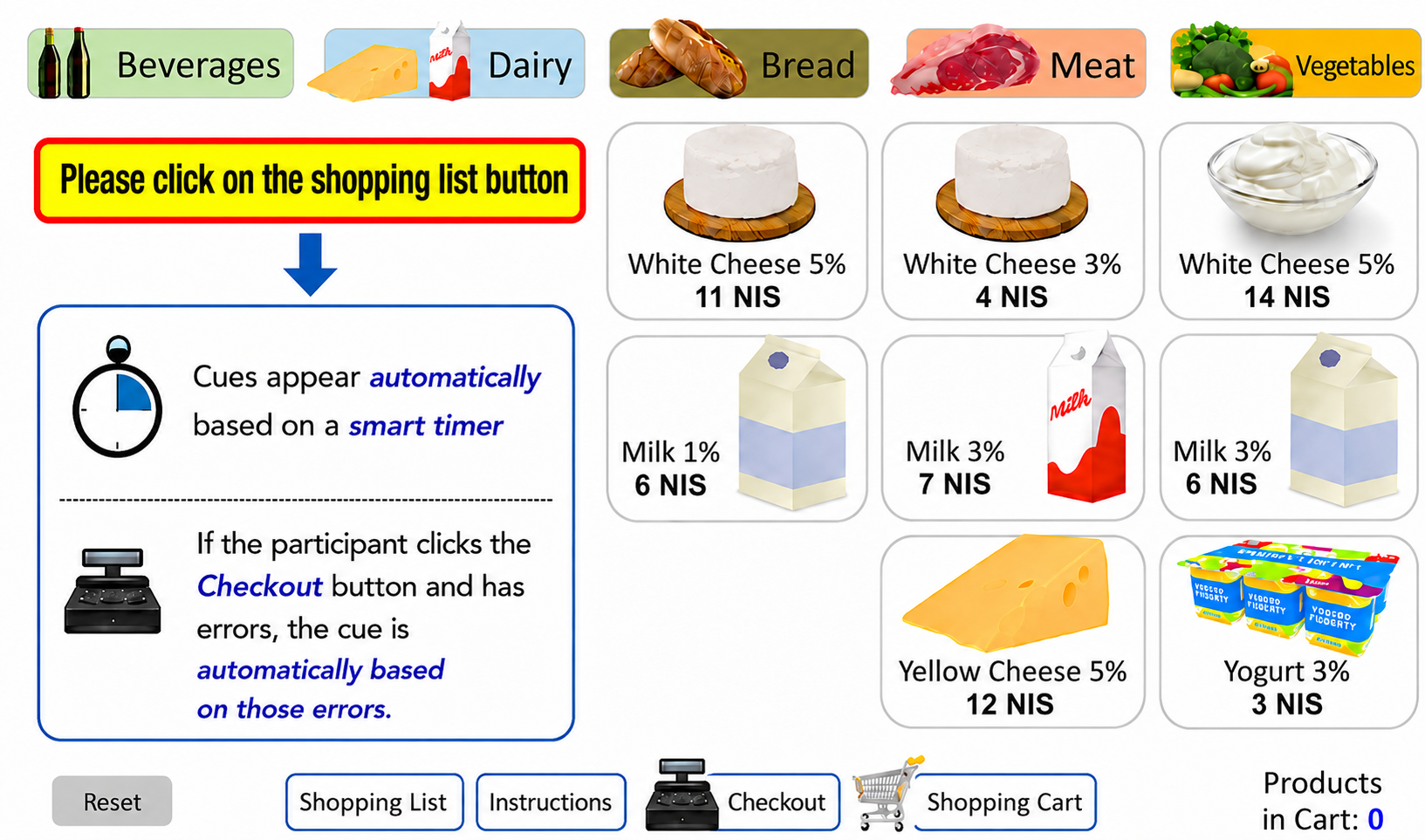
A virtual supermarket shopping task on a tablet, assessing executive functions such as planning, task-switching, and working memory in a naturalistic, everyday activity.
Currently undergoing validation 📱 Android tablet only
Developed by: Sigal Portnoy, Prof. Navah Ratzon & Orit Lief Kimchi · Department of Occupational Therapy, Tel Aviv University & Meir Medical Center
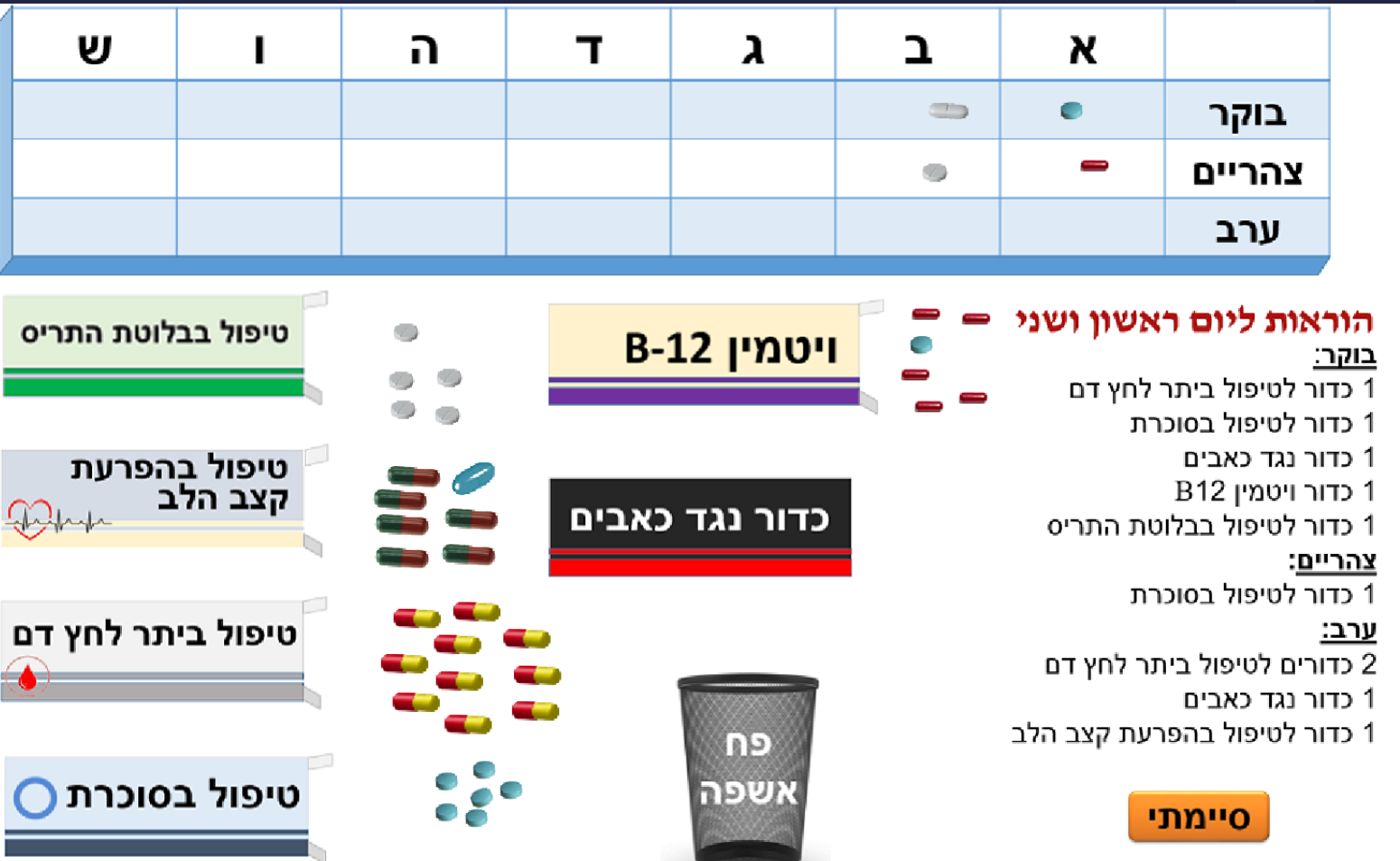
A tablet-based simulation of arranging medicines into a weekly pillbox, assessing functional cognition and the risk of medication-management errors in older adults and clinical populations.
Currently undergoing validation 📱 Android tablet only
Swan-neck orthosis and burn contracture splint fitting software.
Developed by: Sigal Portnoy, Nina Barmin, Maayan Elimelech & Yafa Levanon · Department of Occupational Therapy & Department of Biomedical Engineering, Tel Aviv University
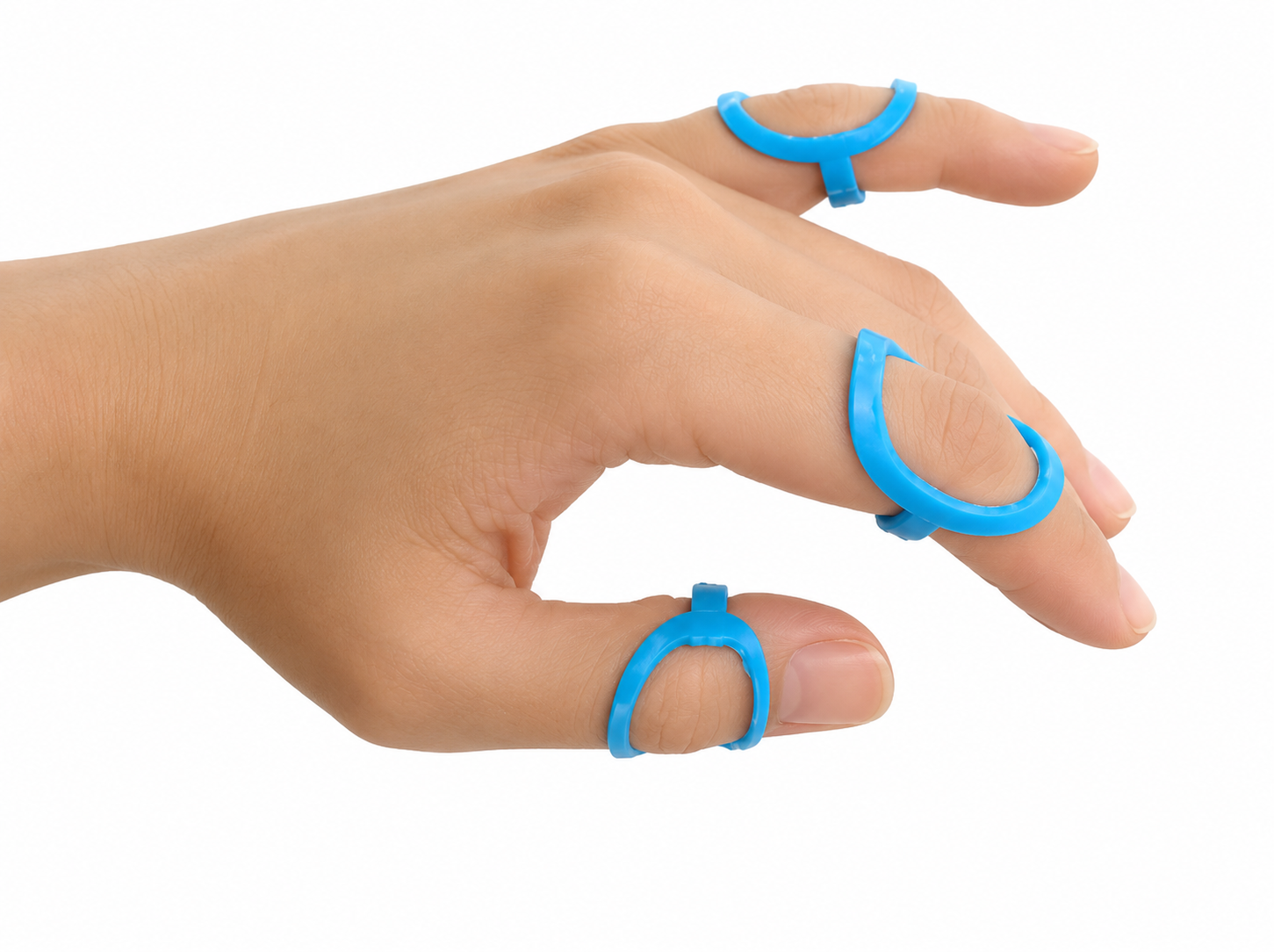
Free software (Windows) that automatically adjusts a swan-neck orthosis 3D model from five simple finger measurements.
💻 Windows PC only
Developed by: Sigal Portnoy & Inbar Segal · Department of Occupational Therapy, Tel Aviv University
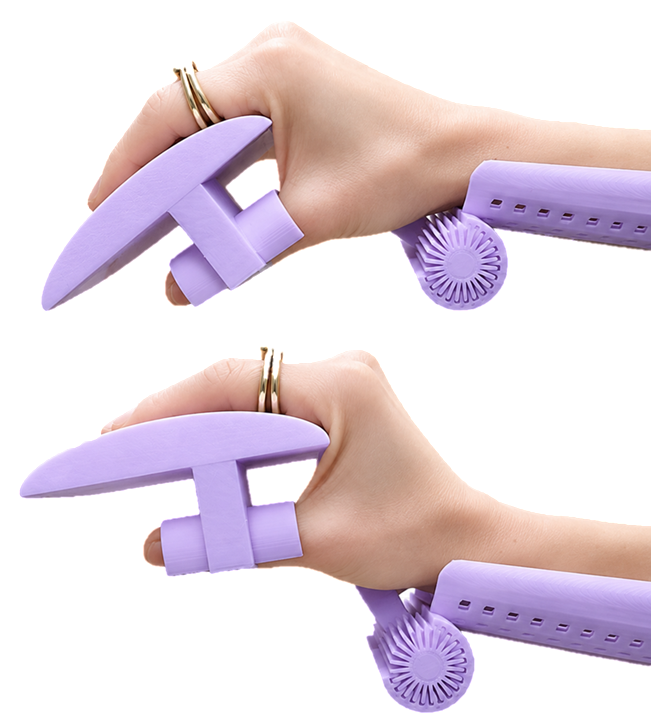
A 3D-printed, adjustable static progressive splint designed to gradually increase joint range of motion in patients with burn-related contractures.
Currently undergoing validation
Systems for evaluating tactile discrimination and fine motor force control.
Developed by: Inbar Didovsky & Sigal Portnoy · Department of Occupational Therapy, Tel Aviv University
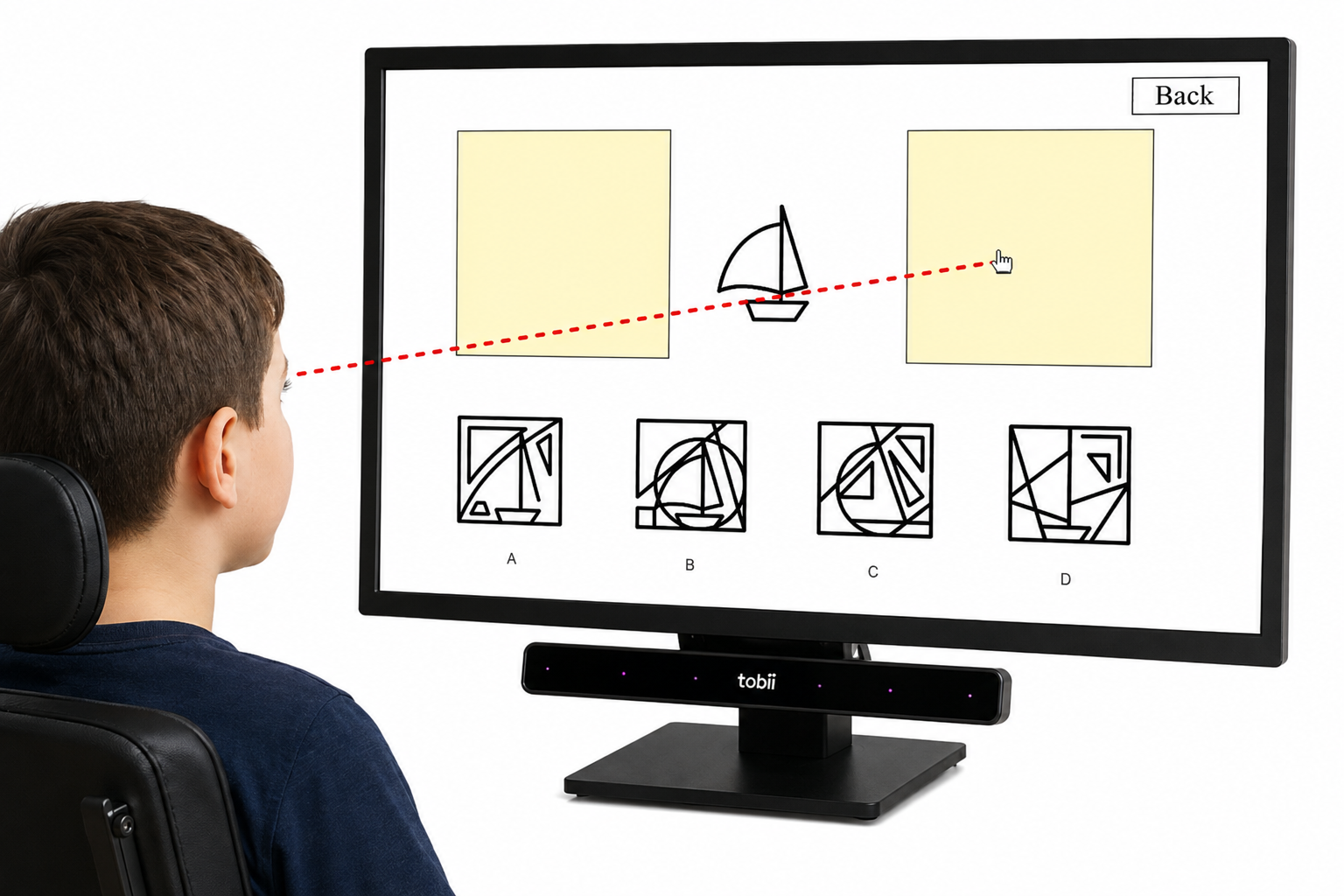
An eye-tracking-based, accessible adaptation of the Motor-Free Visual Perception Test (MVPT), designed for individuals with motor and speech limitations who cannot complete the standard, response-based version of the test.
Accepted for publication · 2026Developed by: Anna Bouzovkin, Maya Levanovsky & Sigal Portnoy · Department of Occupational Therapy & Department of Biomedical Engineering, Tel Aviv University
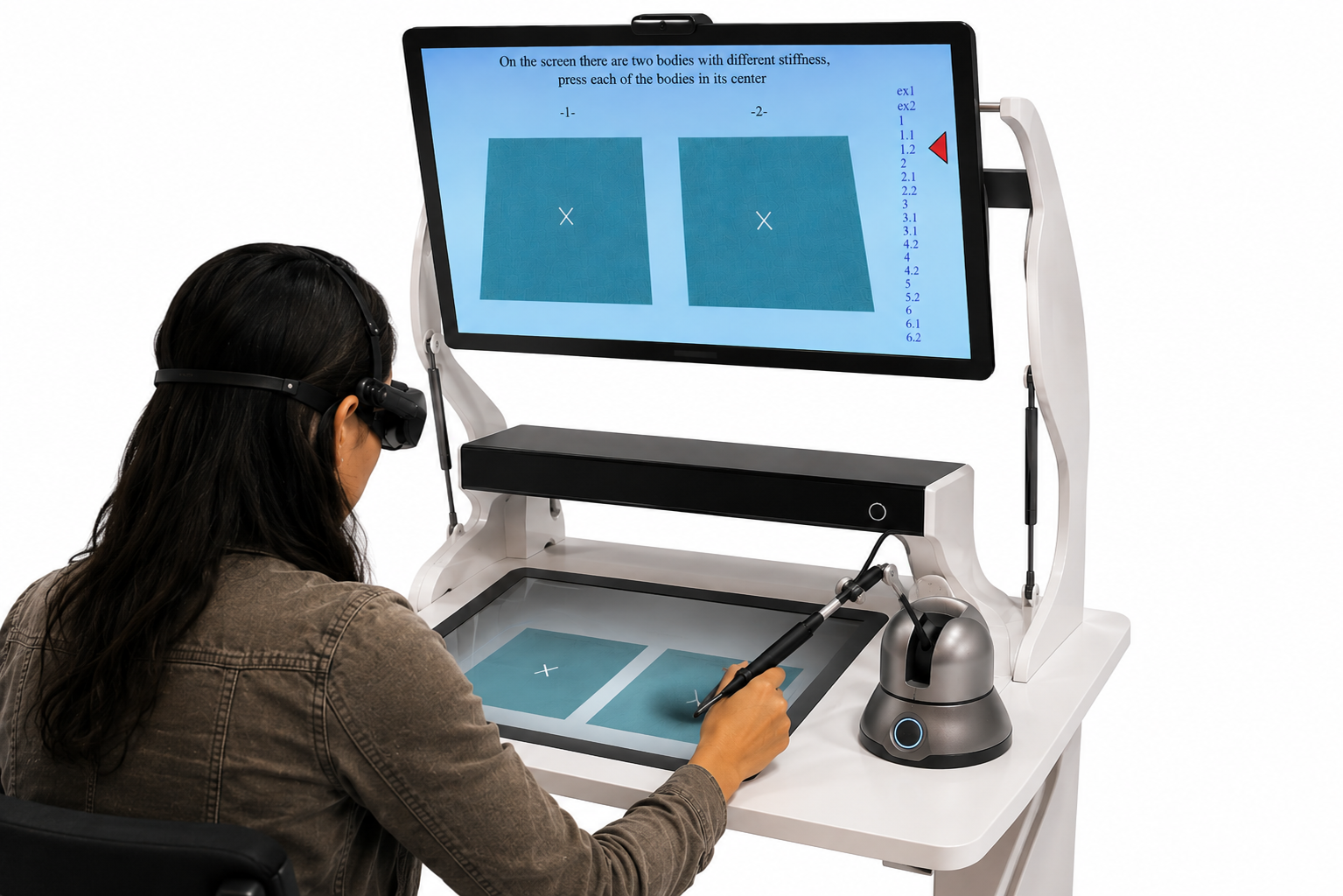
A haptic pen-and-VR system that measures a user's ability to discriminate between the stiffness and texture of visually identical virtual surfaces, for early detection of sensory loss. The system was validated with individuals post-chemotherapy experiencing sensory decline, and this validation study has been submitted for publication.
Validation study submitted for publication
Developed by: Yafa Levanon & Sigal Portnoy · Department of Occupational Therapy, Tel Aviv University
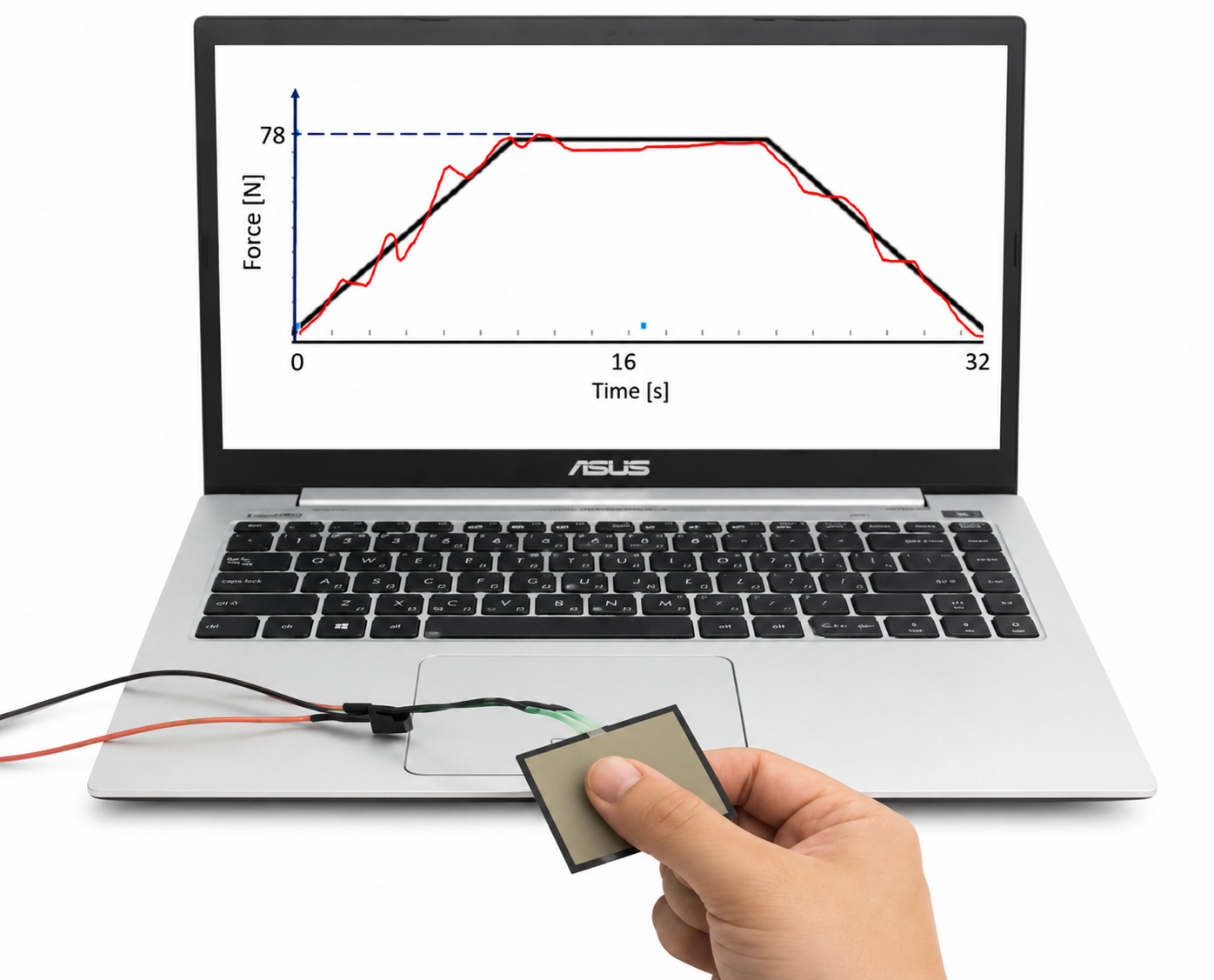
A force-sensing-resistor system that measures the accuracy of lateral pinch force modulation by having users trace on-screen force curves, for early detection of neural impairment.
Sensory-substitution systems that guide users toward objects in physical space.
Developed by: Omer Cohen, Eliav Bareli & Sigal Portnoy · Department of Occupational Therapy & Department of Electrical Engineering, Tel Aviv University
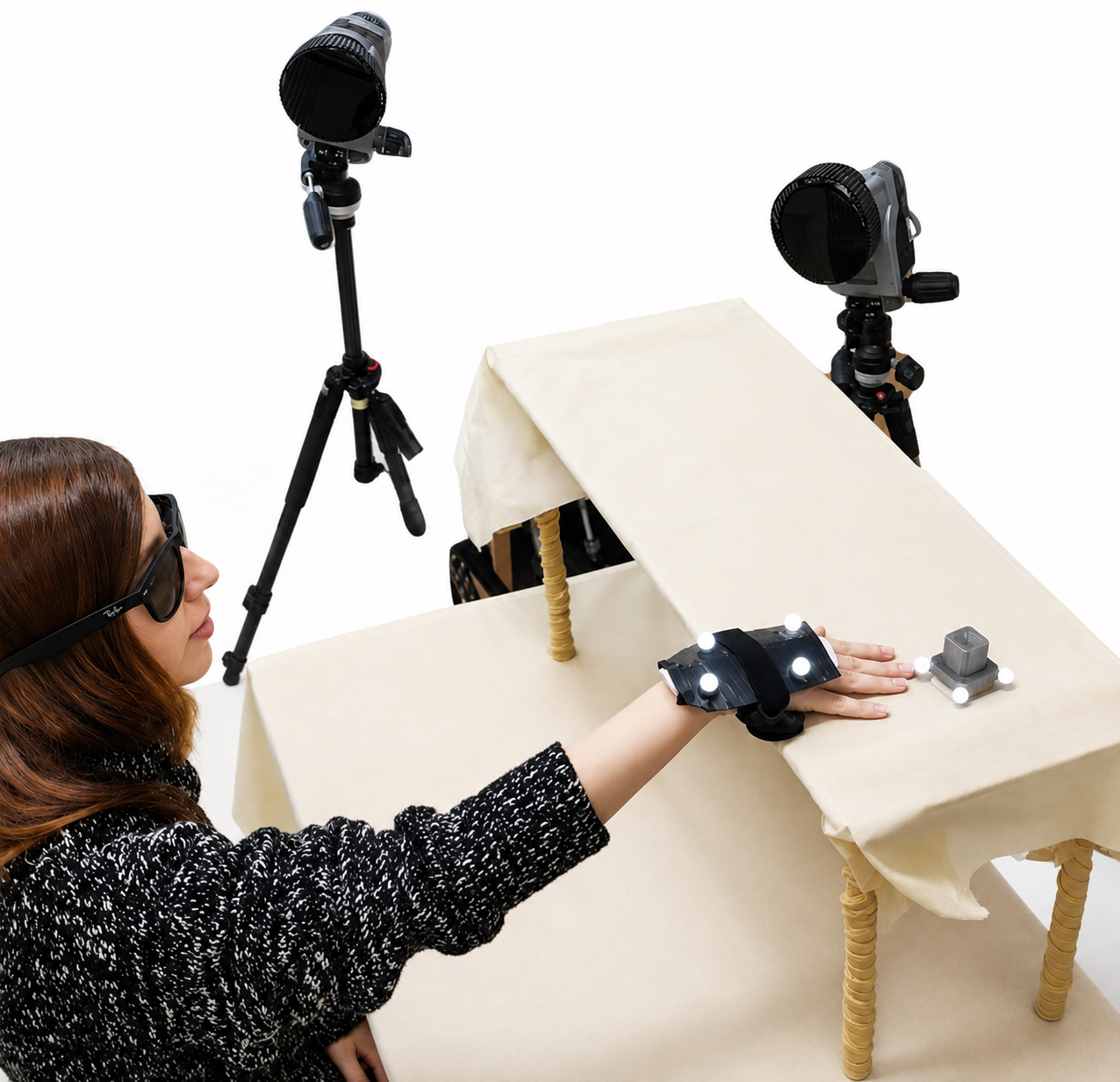
A motion-capture-driven system that automatically guides a user's hand toward a target object using one of three cueing modalities: verbal instructions, pitch sonification, or hand-worn vibration motors.
Developed by: Eitan Raveh, Sigal Portnoy & Jason Friedman · Department of Occupational Therapy & Department of Physical Therapy, Tel Aviv University
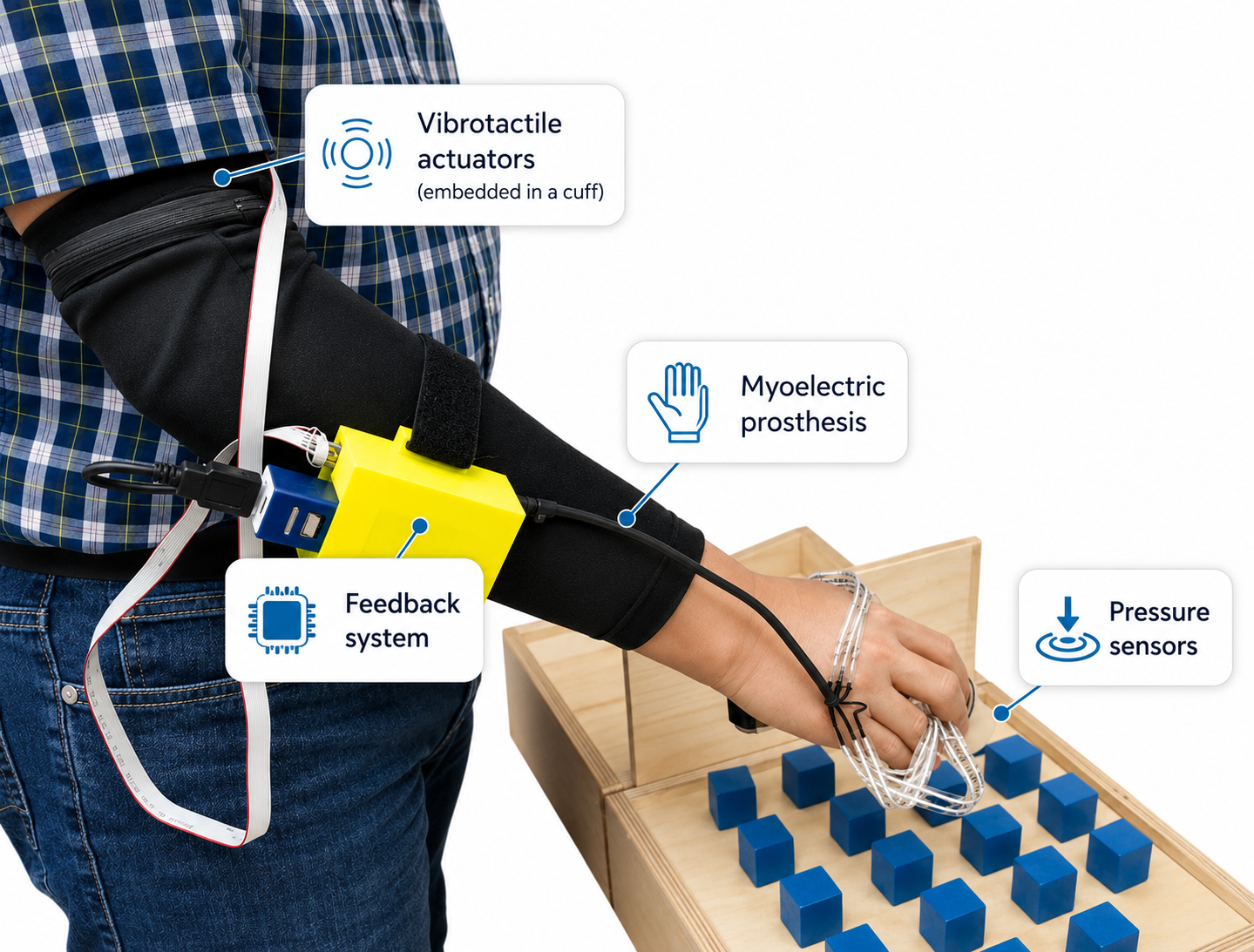
A portable, non-invasive vibrotactile feedback (VTF) system for myoelectric-controlled prosthetic hands. Thin force sensors on the prosthetic fingers detect grip force and drive vibrotactile actuators embedded in a cuff worn on the upper arm, alerting the user to object contact and grip status. Across studies with able-bodied participants and transradial amputees, adding VTF significantly improved performance time and reduced grasping errors (empty grips, empty transitions, block drops) when visual feedback was disturbed, and improved total performance time in a dual-task paradigm, though it did not reliably reduce visual attention allocated to the hand.