The David and Inez Myers Laboratory for Cancer Genetics
Our laboratory investigates the DNA damage response. This research stems from our interest in the human genetic disorder ataxia-telangiectasia (A-T), in which a central axis of the DNA damage response is missing.
The DNA damage response is the cornerstone of a sophisticated system that maintains the stability and integrity of the cellular genome. It is an intricate network of signaling pathways that is rapidly activated following the induction of various DNA lesions - most notably, one of the most dangerous ones – double strand breaks.
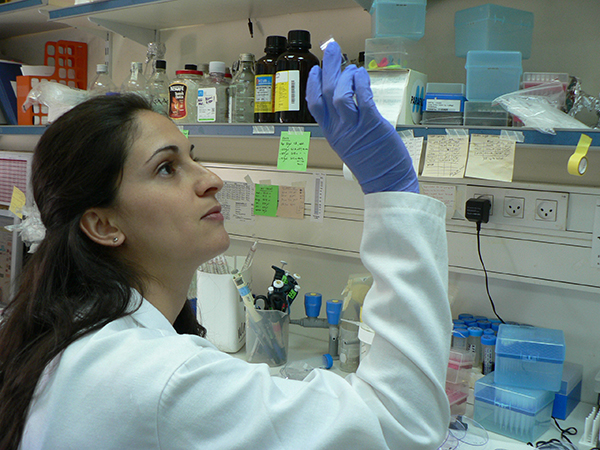
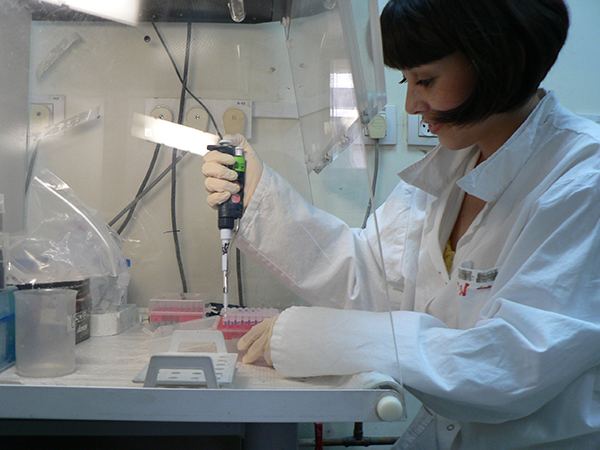
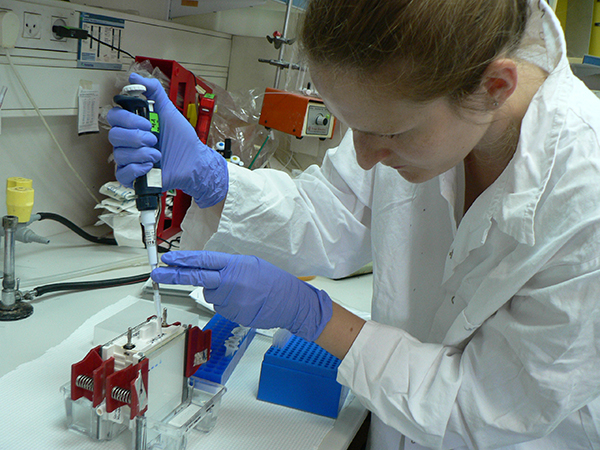
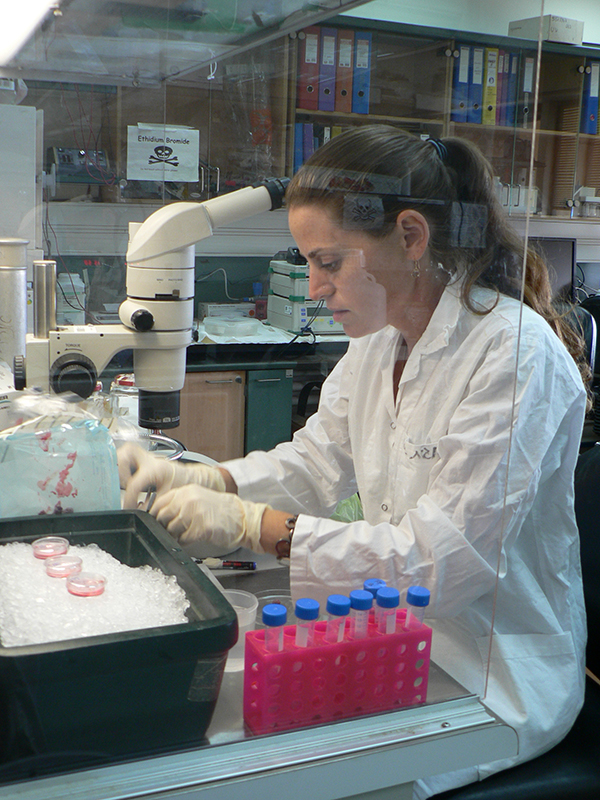
To investigate this system we use cell biology methods, gene targeting in mice, and systems biology methods including high-throughput screens, advanced proteomics and bioinformatics.
Congratulations to Adva Levy-Barda on the appearance of her paper "Involvement of the nuclear proteasome activator PA28γ in the cellular response to DNA double-strand breaks" (Cell Cycle, 10:4300-4310, 2011).
Click the image to enlarge
A figure from Adva's paper:
PA28γ - and ATM-dependent recruitment of proteasome particles to DNA damage sites. U2OS cells were transfected with siRNAs against GFP(irrelevant siRNA) or against PA28γ or against ATM, and localized DNA damage was induced 72 hr later by a focused laser microbeam. Twenty min later the cells were co-stained with antibodies against the proteasome 20S subunit PSMA6 and γH2AX. For further details see Adva's paper.
The background picture shows nuclear foci formed at double strand break sites by the early DNA damage response proteins.