Study Archaeology and the History of the Land of the Bible Where It All Happened!
The Department of Archaeology and Ancient Near Eastern Civilizations at Tel Aviv University, in cooperation with TAU's School for Overseas Students (OSP), is proud to announce the initiation of a new international program for overseas M.A. degree, and a credit program for Ph.D. students. The International Master's program in Archaeology and the History of the Land of the Bible is the only one of its kind in Israel, providing
an exclusive window into the country's perplexing and complex past and using the most up-to-date modern and scientific tools to study the archaeology and history of ancient Israel.
The International Master's program in Archaeology and the History of the Land of the Bible is a one year program that examines the periods from the end of the 2 millennium BCE, the Iron Age, the Assyrian, Babylonian and Persian empires, the late Second Temple period, Mishnaic and Talmudic times, all the way through to the Muslim conquest of the land in the 7th century CE. In the program students explore the issues of theory and methodologies of biblical archaeology, go out on archeological field trips, study biblical and modern Hebrew, and gain hands-on experience in a departmental archaeological excavation. The program is "tailor made" for students from the disciplines of archaeology, biblical studies and history who
wish to broaden their understanding of biblical archaeology and history of the land of the Bible. Students will take part in the vibrant academic life of the Department of Archaeology and Ancient Near Eastern Civilizations and attend courses taught by scholars and researchers at the cutting edge of the fields of archaeology and history of ancient Israel.
|
 |
 |
|
|
| |
 |
|
About the Department of Archaeology and Ancient Near Eastern Civilizations in Tel Aviv University
The Department of Archaeology and Ancient Near Eastern Civilizations of Tel Aviv University is renowned
for its intense involvement in study and research of the biblical period through major excavation projects in
Israel (from Tel Beer-sheba, Arad, and Lachish, up to recent excavations at Megiddo, Tel Beth-Shemesh, Tel
Beth Yerach, Ramat Rahel and Apollonia). Its senior staff members are major players in current debates that
have shaped the discipline (most recently in such issues as Iron Age chronology, the rise of ancient Israel, state formation in Israel and Judah, and a variety of subjects related to exilic and post-exilic periods). |
Curriculum
This program includes nine courses and seminars (in English) taught over three semesters in one academic year. |
1st Semester courses (30/10/2011 3 03/02/2012) |
The first semester will be devoted to 5 intensive introductory courses of two weeks each, taught in two full
days a week:
• Morning: Four academic hours of introductory instruction
• Noon: Two academic hours of mandatory reading
• Evening: Three academic hours of introductory instruction and discussion
The Archaeology and History of the Land of Israel during the Middle and Late Bronze Ages.
• Weeks: 1-2
• Credit: 4.
• Lecturer: Dr. Yuval Gadot
The course presents the archaeology and history of the Land of Israel during the Middle and Late Bronze
Ages, i.e., the second millennium BCE. These periods saw the flourishing and decline of Canaanite culture
as well as the growth and collapse of the Egyptian empire that for a certain period ruled the country. Written
historical documents of the time, among them the El-Amarna tablets, are analyzed and accompanied by that
examination of the material culture of the periods under discussion. By combining the historical and
archaeological evidence, an understanding of the social, economical, political, and ethnicaspects is gaine |
Biblical Israel and Judah: The Archaeology and History of Israel during the Iron Age
• Weeks: 3-4
• Credit: 4
• Lecturer: Prof. Israel Finkelstein
The course confronts the archaeological finds, the biblical text and ancient Near Eastern records in an attempt to
reconstruct the history of ancient Israel. It covers the Iron Age I-II. It deals with specific sites as well as
broad phenomena related to biblical history.
|
|

|
 |
The Archaeology and History of the Land of Israel during the Exilic and Post-Exilic periods
• Weeks: 5-6
• Credit: 4
• Lecturer: Prof. Oded Lipschits
The aim of this course is to analyze the archaeology of Judah between the late
7th and 4th centuries BCE as a tool for understanding the history of the land from the period when Judah was a Babylonian vassal kingdom, to the period when it was a Babylonian province (the "Exilic period"), through to the period when it was a Persian (Achaemenid) province (the period of "Return," the time of Ezra and Nehemiah). Lectures will include discussions of the methodology of historical reconstruction of the biblical periods using biblical and other historical sources, as well as ways to combine archaeological material in the historical discussion.
|
The Archaeology and History of the Land of Israel in the Late Second Temple Period
• Weeks: 7-8
• Credit: 4
• Lecturer: Prof. Oren Tal
This course will examine aspects of the Greek and Roman material culture characteristics in the Late Second
Temple Period in the Land of the Bible (332 BCE 70 CE). Among the topics to be discussed are urban
architecture (i.e., fortifications, public buildings, cult buildings, residencies, and private dwellings), rural
architecture (villages and agricultural estates), military architecture (forts, fortresses and towers), architectural
decoration, settlement patterns and models, burial practices, epigraphic finds, small finds, etc. These topics
will be critically analyzed in an attempt to evaluate processes of continuity and interruption, that is, trends of
traditionalism from earlier periods as opposed to innovative concepts that can be related to the Greco-
Macedonian, Ptolemaic, Seleucid and Imperial Roman cultural assimilation over the Land of the Bible.
The Archaeology and History of the Land of Israel in the Days of the Mishnah and Talmud
• Weeks: 9-10
• Credit: 4
• Lecturer: Prof. Moshe Fischer
The "Days of the Mishnah and Talmud" refers to the Roman Imperial and Judaic aspects of the Byzantine
periods in the Land of Israel (1st to 7th centuries CE). This period represents the peak of post-biblical Judaism
in the Land of Israel, and is reflected by Jewish settlements, public and domestic architecture and art of a
multiethnic and multi-religious Land of Israel during this time. The course presents the main aspects of the
consolidation of Roman rule (military aspects, roads and milestones, urbanization, etc.), as well as the bilateral
acceptance of Jewish and Roman milieu leading to a kind of modus vivendi. As these phenomena occur,
mainly towards the Late Roman period, Christianity is gaining prominence, while another ethno-religious
group—the Samaritans—also consolidate themselves. All this leads to a multi-ethnic-religious mosaic which
in fact characterizes Late Roman and Byzantine Israel.
The Archaeology and History of the Land of Israel The 9th Century BCE as a Case Study
• Weeks: 11-12
• Credit: 4
• Lecturer: Mr. Omer Sergi
Archaeological research indicates that the Biblical Kingdom of Judah emerged as a full blown territorial
kingdom during the 9th century BCE, a period that of major historical developments as it saw the rise of
other Levantine territorial states together with the first attempts of constructing a trans-Euphrates Assyrian
Empire. The Biblical Historiography depicts it as a restless period of ongoing wars and political instability in
Israel, Damascus and Judah. In this seminary we shall examine these events by reviewing the relevant
Archaeological, Historical and Biblical records, assessing each of them separately and contextually in order
to reconstruct the formation of the kingdom of Judah, and the reflection of it in the Biblical record.
The Archaeology and History of the Land of Israel 3 The Shephelah as a Case Study
• Weeks: 13-14
• Credit: 4
• Lecturer: Mr. Ido Koch
The common wisdom regarding the Judean Shephelah (lowland) during the Biblical Period reconstructs an
array of Philistine city-kingdoms in the west and the Kingdom of Judah in the east. These two ethnically
defined entities struggled, according to this reconstruction, until the destruction of the later. In this course,
we will focus on analyzing the common held reconstruction, which will be compared to the biblical and
archaeological data about the Shephelah. By reassessing this information, we will reconstruct an alternative
reconstruction of the history of the Shephelah from the end of the Late Bronze period (twelfth century BCE)
to the end of the Persian period (fourth century BCE).
Final Assignments:
• Students will submit a short summarizing essay for each course.
• During the last three weeks of the semester the students will write a scientific essay on a subject of their
choice and present it by the end of the 1st semester break.
2nd Semester seminars (04/03/2012 3 22/06/2012)
The 2nd semester will be taught in a form of one introductory course and two seminars, 4 hours classes each,
once a week. |
|
The History and Archaeology of the Ancient Near East during the Bronze and Iron Ages (3000-500 BCE)
• Credit: 4
• Lecturer: Dr. Yoram Cohen
This course is a general introduction to the history and archaeology of the ancient Near East from the beginning of writing in the fourth millennium to the fall of the Babylonian empire to the Persians at the end of the 6th century BCE. The course places particular emphasis on the beginning of urbanization in Mesopotamia and Egypt during the third millennium, the rise and spread of the Amorites in the early second millennium, the
great powers and petty states of the Late Bronze Age, and the age of empires (The Neo-Assyrian and Neo-
Babylonian Empires) during the Iron Age. Significant cultural and historical contributions of the area—such as
the spread of writing and the alphabet, international trade, secular and religious architecture, state formation,
and warfare are placed in their proper context and evaluated according to the latest discoveries and current
methodological theories.
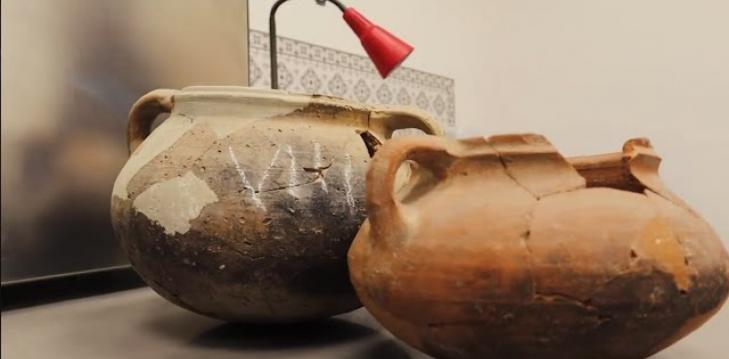
"Pots and People": Ceramic Technology, Typology and Sociology during the Bronze and Iron Ages
• Credit: 4
• Lecturer: Dr. Alexander Fantalkin
The analysis and interpretation of ceramic materials allows archaeologists to accomplish a variety of tasks:
establish chronologies, document interconnections between different regions, analyze activities, interactions, and social identities in past societies. This course provides preliminary familiarity and background with the
ceramic repertoire (including imported pottery) popular in ancient Israel and neighboring lands during the
Bronze and Iron Ages. The seminar focuses on the techniques and theories used to bridge the gap between
the recovery of ceramics during archaeological excavations and surveys and their interpretation. The course is
divided into four sections. Ceramic technology deals with the physical properties of raw materials and the
technological aspects of pottery making and use. Ceramic typology covers the major methodologies used in
ceramic analysis. Ceramic chronology emphasizes the principal role of ceramic data in establishing a reliable
time-scale for ancient Israel. Ceramic sociology explores how pots and people interacted socially in the Land
of the Bible, focusing on the large-scale dynamics of supply, demand, and meanings of different classes of
pottery, tracking their changes across time.
|
|
 |
The Role of the Exact and Life Sciences in the Reconstruction of Ancient Israel
• Credit: 4
• Lecturer: Prof. Yuval Goren
The course is an introduction to highly specialized scientific methods of microarchaeology (the use optical mineralogy, micromorphology, and metallography) and geoarchaeology (the use of geoscience methods and
techniques to solve archaeological problems), as evidencing new research directions and methods in the study of the reconstruction of ancient Israel. It also addresses the emergence and development of the choice of complex technologies during the time and their social and economic implications. |
Final Assignments:
• Students will submit a short summarizing essay for the introductory course
• Students will submit two seminar papers for each of the seminars, one in the form of a long seminar paper
(i.e., 5,000-7,500 word research paper), and the other in the form of shorter research paper (of some 3,500-
5,000 words)
Most of the finds from the villa came from the later phase
and include table, cooking and storage vessels, and local and imported lamps (Fig. 7). Smaller quantities of stone and glass
vessels, bone objects and human and animals figurines were also discovered.
3rd semester field experience (July3August 2012)
The summer semester is confined to active participation in one of the excavation projects for a period of 4-6
weeks under the auspices of the Institute of Archaeology of Tel Aviv University. Participants in the program
will dig at either:
• Azekah (directed by Prof. Oded Lipschits, Dr. Yuval Gadot and Prof. Manfred Oeming of Heidelberg
University)
• Beth Shemesh (directed by Prof. Shlomo Bunimovitz and Dr. Zvi Lederman)
• Megiddo (directed by Prof. David Ussishkin and Prof. Israel Finkelstein)
Modern Hebrew Studies
The program offers students the opportunity to acquire a sound knowledge of the Hebrew language. An
intensive Hebrew language program (Ulpan) by the School for Overseas Students at Tel Aviv University is
offered prior to the Spring Semester, taught at all levels.
Overseas Student Program Courses
Participants in the program will be permitted to attend 2 additional courses in the Overseas Student Program.
For course description see the web site of The School of Overseas Students, Tel Aviv University: http://www.tau.ac.il/overseas/
|
|
|
 |