|
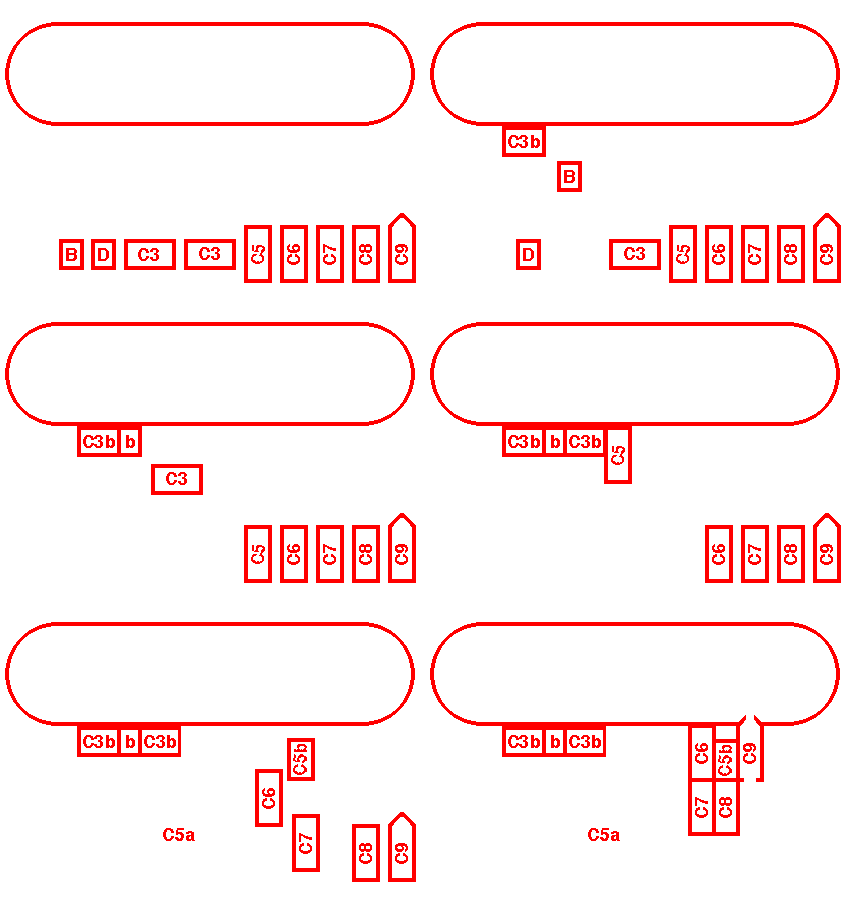
The alternative pathway of complement activation is illustrated above. Complement components are present in the blood plasma. C3 is constantly being hydrolyzed and destroyed and replenished. When a microbe is present, one component of hydrolysis, C3b, binds to the microbial surface and remains stable long enough for protein factor B to bind. Factor B is cleaved by factor D, leaving a component b that is an active protease which breaks down more C3 so that additional C3b is bound and cleaved. The resultant C3bbC3b complex acts as a "C5 convertase". C5 is cleaved, yielding a C5a component that is a powerful chemoattractant. C5b binds C6, C7, C8, and C9 to form a "membrane attack complex" that punches a hole through the membrane in the microbe. |