


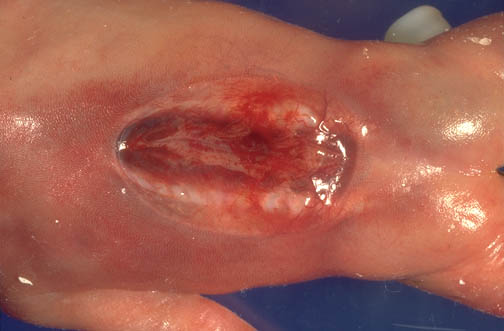
Correlation 2: MeningomyeloceleNote the large defect in the lower back region of this baby. This neural tube defect is so large that the spinal canal is open and the meninges and cord can extend out, making this a meningomyelocele. You may see the term "spina bifida" used to describe a more subtle defect seen on a radiograph in which there is incomplete closure but skin still covers the defect. When the nervous system is formed in embryogenesis, there is a neural tube that closes. Lack of closure leads to a neural tube defect (NTD). Such a defect is a form of birth defect. The genetic polymorphisms due to mutations in the methylene tetrahydrofolate reductase gene may increase the risk for NTDs. Folate is a cofactor for this enzyme, which is part of the pathway of homocysteine metabolism in cells. Certain mutations are associated with elevated maternal homocysteine concentrations and an increased risk for NTDs in fetuses. Mothers who supplement their diets with folate prior to and during pregnancy can often reduce this risk. |
|
|
