The Laboratory for Comparative Microarchaeology and Metal Conservation
Contents:
* Comparative Microarchaeology
* Ceramic Petrography
* Provenance Study of Clay Cuneiform Tablets
* Micromorphology of Archaeological Sediments
* Metal Conservation
* Current Research Projects (2008)
|
 |
 |
Comparative Microarchaeology
Microarchaeology is the study of archaeologically related materials under the microscope. This discipline focuses on the observation
of minuscule occurrences in the archaeological record that are invisible to the naked eye. As in archaeology of the mega scale,
microarchaeology includes aspects of fieldwork and laboratory analyses that investigate a broad spectrum of cultural and historical
questions.
The Laboratory for Comparative Microarchaeology accommodates the facilities for a wide choice of microarchaeological
analyses. It can support studies in the fields of ceramic petrography,
plaster technology studies, micromorphology of sediments, use-wear analysis of artefacts,
microbotany, palynology, micropaleontology, and metallography. A new field, developed at
the laboratory, is the microscopic study of clay cuneiform tablets.. The laboratory is equipped
with biologic, polarizing (petrographic), incident light brightfield/darkfield, phase contrast and stereoscopic microscopes. In
addition, it is equipped with facilities for the production of petrologic and sedimentologic thin sections, digital microphotography
and image analysis. The laboratory houses the largest collection in the world of Eastern Mediterranean archaeological ceramics in thin sections
comprising over 12,000 specimens. A small exhibition is dedicated to the history of the optical microscope, including the first
research microscopes acquired by the Hebrew University in Jerusalem and Tel Aviv University. A section of the laboratory focuses
on the conservation of metal artefacts.
At present, the Laboratory for Comparative Microarchaeology is focusing on the following research methods:
|
Ceramic Petrography
Petrography comprises the mineralogical description and analysis of stone and pottery by utilizing the techniques of optical
mineralogy and petrology commonly used by earth scientists. This method is carried out to establish where raw materials
originated from and, for pottery vessels, how they were fabricated. Knowing the origins of raw material helps the archaeologist
establish and understand patterns of trade, manufacturing processes and even political organization. Petrography is done
by examining thin-sectioned samples through a microscope. A thin slice
|
 |
 Letter of the ruler of Ashtarot (Syria) from the Amarna archive and its view in thin section. |
from a vessel or a sherd is mounted on a glass slide and ground down to a thickness of 30 microns (0.03 mm). The thin section can then be viewed
using a polarizing (petrographic) microscope, allowing the inclusions, (which may comprise minerals, rocks, organic material
and man-made materials such as grog and slag) to be identified. The inclusions may be naturally occurring in the clay, or
they may have been added intentionally by the potter as a temper to improve the properties of the clay during working, firing
and subsequent use of the vessel. The texture and composition of the fabrics in a selected pottery assemblage can be
characterized and sherds with similar fabrics can be grouped together. From the identification of the rock and mineral
inclusions it may be possible to suggest provenance(s) for the pottery studied, by comparison with the local geology
in the area where it was found, and over larger areas for exotic non-local fabrics. Information on the manipulation
of the raw materials by the potter, forming techniques used in the construction of the vessels, and the conditions under which
the pottery was fired may also be gained from the study of thin sections of pottery.
Provenance Study of Clay Cuneiform Tablets
Ancient Near Eastern archives of cuneiform texts contain numerous tablets the origin of which is unknown. Letters often, but not
always, contain the name and address of the sender. Moreover, the location of some ancient Near Eastern countries and towns has
not yet been clearly established. Recently, The Laboratory for Comparative Microarchaeology has conducted a study that approaches
the problem of locating the provenance of the Amarna tablets through mineralogical and chemical analyses of over three hundred items,
now stored in museums in Berlin, London, Oxford and Paris. The system has proven reliable, and has supplied highly interesting results.
At present, the same method is applied to the corpus of second and first millennia BCE cuneiform texts from the southern Levant.
The main purpose of the research project is to attempt to solve a number of historical, geographical and chronological problems
relating to the documents with the help of mineralogical and chemical methods. The results of the provenance study serve in
interpreting the political and economic structure of the cities concerned during the second and first millennia BCE. A secondary
purpose of the project is to initiate a comprehensive collection of analyses of ancient Near Eastern tablets for the benefit of
the worldwide community of scientists.
|
 Mousterian sediment from the Amud Cave, Stratum B2/6, in thin section, showing burnt bone splinters in a turbated matrix. |
 |
Micromorphology of Archaeological Sediments
Micromorphology is the microscopic study of soils and sediments in thin section. This powerful method enables the examination
of archaeological deposits in situ at the micro-scale. The thin sections are prepared from undisturbed and oriented block samples that
are removed from sections and surfaces within the site. The samples are first impregnated in vacuum conditions by synthetic resin and
then cut by a diamond disk saw, polished and glued to microscope carrying glasses; they are then polished again to form a thirty-micron
thin section. As an extension of field observations and interpretations, micromorphology is used to make inferences concerning various
depositional and post-depositional processes, and to define the nature of human activities at different parts of the site.
|
 A bronze and silver weight from Yavne Yam, after cleaning. |
 |
Metal Conservation
In antiquity, only a limited range of metals were used, including iron, tin, copper, lead, silver and gold. From the forth millennium BCE onward,
metals were used regularly to produce tools, weapons and ornaments. In classical periods metal was widely used for the manufacture of coins. Each
of these metals was used individually and in combination with the others, or with zinc, to form more serviceable alloys, such as bronze, brass and pewter.
From the moment of manufacture, the various metals and their alloys, except for gold, react with their environment and begin a corrosion process that
converts them to more stable compounds. Therefore, appropriate conservation techniques should be applied to a metal artefact in order to stop the
corrosion process, clean it, if possible, and enable its study. The Metal Conservation Laboratory at the Institute of Archaeology operates various
|
methods of physical and chemical treatments to preserve metal artefacts and prevent their decay.

|
Current Research Projects (2008)
The Location of Specialized Copper Production by the Lost Wax Technique in the Chalcolithic Southern Levant
Yuval Goren
The origins of southern Levantine Chalcolithic copper metallurgy has been debated for decades. Typological and
metallurgical examinations of the copper artifacts from the Nahal Mishmar hoard and elsewhere have indicated a
dichotomy between simple tools, made of pure copper by open casting, and elaborate items made by the "lost wax"
technique of copper alloys with arsenic, antimony, and nickel. While the first were considered local production of
the northern Negev sites, the prestige objects were either considered as imports from the remote sources of
arsenic copper, or local to the southern Levant. The research project is aimed at examining this issue through the
analysis of ceramic mold remains that were still attached to a large number of copper implements from Israel. The
results suggest that during the Chalcolithic period (ca. mid 5thmid 4th
millennia BC), advanced copper metallurgy was carried out in a single production center located in the Judean Desert.
|
 |
 Copper mace from Beer Sheva with mold remains still attached to the surface (arrow) |
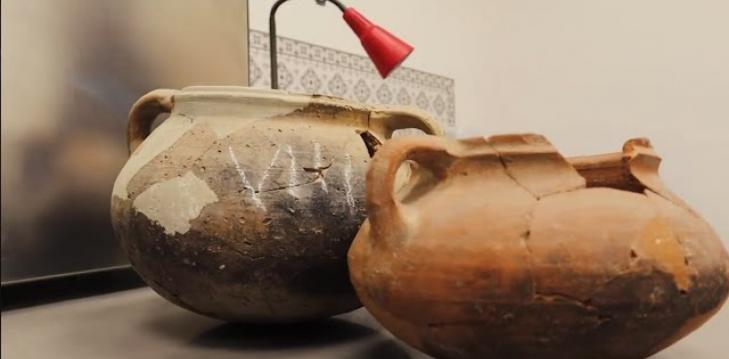
 Canaanite Jar from the Uluburun shipwreck |
 |
Marine and Overland Interactions in the Eastern Mediterranean Area During the 2nd Millennium BCE
Nissim Golding
|
Dynamic interaction throughout western Asia and the eastern Mediterranean Between ca. 15001200 B.C. brought
about a period of international commerce characterized by the transmission of commodities, artistic motifs and styles
derived from Mesopotamia, Anatolia, Egypt, the Levant and the Aegean. This research project aims at disclosing more
evidence about the characteristics of this international exchange system through detailed provenance analyses of the ceramic
containers of some key commodities (wine, oil, resin, honey,
|
 |
 Nissim Golding
|
|
etc) that played a major role in the transportation of goods. This includes ceramic containers, galley wares and some sailing equipment from the cargo of
the two most important contemporary shipwrecks ever to be found along the eastern Mediterranean coastline
(Uluburun and Cape Gelidonya), storage jars from some of the main Levantine ports of the period, and detailed study
of comparable vessels from contemporaneous sites along the northern Sinai coast, which served as the main
land-bridge between Egypt and Asia. The study is supported by a research grant from the Israel Science Foundation.
|
|
Egyptian Connections with the Southern Levant during the Chalcolithic Period (Mid 5thMid 4th Millenium BCE)
Shahaf Zach
 Shahaf Zach
|
 |
The intention of this research is to examine some fundamental aspects of the social and economic patterns of the
Chalcolithic Period of the southern Levant (ca. mid 5thmid 4th millennia BC),
especially the extent and nature of the overland foreign relations of the Ghassulian Culture in Israel. This is done through
systematic provenance studies of the Ghassulian pottery that was unearthed in Tell Fara'in/Buto in the Nile Delta,
outside the
|
|
confines of this culture, and the pottery assemblages that were found in sites along northern Sinai. This
study is crucial for understanding the nature of the contacts of the Ghassulian Culture with the contemporaneous
Maadi-Buto Culture of Lower Egypt before the unification of Egypt and the rise of the Old Kingdom.
|
|
 |
 Chalcolithic V-Shaped bowls from Buto |
 Haim Ashkenazi examining the sandal from the 'Cave of the Warrior' |
 |
Archaeology of the Individual: Reconstruction of the Life and Death of "The Warrior" from Wadi el-Makkukh
Haim Ashkenazi
The Judean Desert, and especially its numerous caves, has yielded several of the most important and exciting
discoveries made in the Near East. Over the course of history, this desert has served a place of habitation and refuge.
The arid climate enabled the preservation of organic materials, making the region a trove of otherwise perishable objects.
The study is focusing on the burial of an individual dating to the fourth-millennium BCE, discovered in a cave in
Wadi el-Makkukh. The cave is in fact a small fissure in a cliff, explored in the winter of 1993. The major finds comprise
the grave goods of a so-called warrior, thus termed on account of the weapons associated with the burial. The skeleton
was found wrapped in shrouds, accompanied by some objects of perishable materials, which may have been for personal
use. The finds include a large plaited reed mat, three textiles, a coiled basket-bowl, a wooden bowl, a bow and arrows,
a stick, a
|
pair of leather sandals, and a large flint knife. All of the objects were heavily stained with red ocher. Through
systematic micromorphological and other microarchaeological methods, the finds from the burial are studied in order to
reconstruct the origin of the man, his style of life and the possible circumstances of his burial.
|
An Analytical Approach to the Riddle of the Knossian Replica Rings from Crete and Thera
Yuval Goren and Diamantis Panagiotopoulos (University of Heidelberg)
The question of the Knossian Replica Rings undoubtedly represents one of the most intriguing problems in the study of the
political setting of Neopalatial Crete. It was the Greek archaeologist Spyridon Marinatos who first observed that some of
the sealed clay nodules found at various Cretan sites were apparently impressed by a certain set of high-quality gold rings
that existed in the island. The unique attribute of these specific nodules was that as opposed to others, examples of each
type of them were found in more than one site in the island. Hence the most important aspect of this group is that sealings
|
 |
 Minoan seal impression from Sklavokambos (Crete) depicting a bull leaping scene |
impressed by one and the same ring were discovered in two to four different sites. This discovery attracted much
scientific interest and it plays now a fundamental role in the debated reconstructions of the island's political geography
during the Late Minoan IB (LM IB) or Neopalatial period. Our research project attempts to investigate systematically the
sealings through their style, fabric, use-wear, physical properties of the clay and non-plastic materials, in the attempt to
identify the technology, degree of uniformity and possible provenance of the sealings in order to reconstruct their
administrative background. Based on the methodologies developed and the experience gained during the sampling and
analysis of many delicate Near Eastern clay tablets and seal impressions, this study was performed with the promise to yield
some new information about the sources and relative chronology of these stately representations.
|
 Stamped Yehud jar handle |
 |
Provenance Study of the Yehud Stamped Jars
Yuval Goren and Oded Lipschits
532 Yehud Stamp Impressions dated to the Persian and Early Hellenistic period are currently known, about 150 of which
remain unpublished. 257 of these stamp impressions were discovered at Ramat Rahel, 135 at the City of David, 27 on or near
the Western Hill of Jerusalem, 20 at Tell en-Nasbeh, 18 at Jericho, 16 at Nebi-Samwil, 10 at En-Gedi, 8 at Gezer, 7 at Rogem
Gannim, 3 at Khirbet Nisya, 2 each at Bithani, Binyane Ha'umma and Tel Harasim, and one each at 12 different other sites.
The origin of 13 stamp impressions is not known. The study attempts to examine the provenance of these stamped jars in
order to investigate the administrative and economic background of their production and to compare them with earlier (Late
Iron Age) lmlk and rosette stamped jars.
|
Petrographic Analysis of Judahite Bullae from the Time of the First Temple
Shira Gurwin
 Shira Gurwin
|
 |
Little has been preserved in the archaeological record from the rich literary material of the kingdom of Judah. Despite the
discovery of some contemporary epigraphs, such as ostraca and seals, it may be assumed that many of the documents were
apparently written on scrolls or papyri that have not survive. Only some meager remains of these texts have been preserved
in the form of bullae, namely, the clay sealings that were once attached to them. The present study is aimed at providing the
opportunity to analyze some as yet
|
|
 |
 Late Iron Age Bulla from the City of David |
unstudied aspects of the Judahite bullae. Since it is widely believed that bullae were used
to seal documents sent from one authority to another, ensuring the discrete reading of a message by the addressee alone,
we first attempt to disclose the geographical origin of the bullae, in order to map the network of the administrative
correspondence. By doing so, we hope to reveal the location of several personalities and to draw the outline of Judahite
bureaucracy. The bullae examined in this research include two main groups found in Jerusalem, an assemblage of bullae from
Lachish, as well as some others.
|
 Mark Iserlis
 Khirbet Kerak Ware from Affula |
 |
Khirbet Kerak Ware as a Southern Manifestation of Early Trans-Caucasian Culture
Mark Iserlis
Khirbet Kerak Ware (KKW) is a remarkable type of bichrome pottery dating to the Early Bronze Age III (late 3rd
millennium BCE). The ware consists of a variety of bowls, kraters, jars and stands beautifully burnished in red and black, as well as of
unburnished cooking ware and portable hearths, all made in a style and technique clearly alien to the local traditions. This ware
has been linked to groups of Early Transcaucasian migrants who emerged in the Kura-Araxes region, and spread to southeastern
Anatolia and the Levant during the 3rd millennium BC, producing distinctive ceramics known in Turkey and Syria as Karaz
Ware or Red-Black Burnished Ware. The aim of the present research is to examine assemblages of KKW from selected sites in the
Levant and the Transcaucasus by petrography and other technological means, in order to better define the technological traits
of this unique ceramic tradition.
|
Technology and Provenance of Early Iron Age Tuyères from the Iron Workshop at Beth Shemesh
Nadine Reshef
|
 Nadine Reshef
|
 |
An iron workshopthe earliest known from eastern Mediterraneanhas been unearthed in the excavations at Tel Beth-Shemesh.
During the 10th to the beginning of the 9th centuries BCE, this iron workshop was active in the south part of
the site. Dozens of iron implements and slags were found within it, together with clay tuyères (furnace bellow nozzles). While
this large smithing workshop existed at
|
|
 |
 Tuyères (bellow nozzles) from the iron workshop at Tel Beth Shemesh |
Tel Beth-Shemesh, a major iron smelting operation site was found at Tell Hammeh in Jordan (excavated by
the Yarmouk University and the Leiden university), dating to ca. 930 BC. At both sites the technical ceramics in the form of
tuyères were, most significantly, square rather than round by their cross-section. This research project is aimed at exploring the
role of the tuyères at both Beth-Shemesh and Tell Hammeh within the framework of technological choice and craft production in
their context. Through petrographic analyses and other analytical tools, the provenance and technical aspects of the tuyères
are examined in order to investigate possible links between the two complementary iron workshops.
|
 Royal treaty from Ugarit |
 |
The Contents and Origin of a Collection of Sumero-Akkadian Documents found at Ugarit-Ras Shamra
Meital Kaufman
|
Ugarit (modern site Ras Shamra) was an ancient cosmopolitan port city, sited on the Mediterranean coast of northern Syria a few
kilometers north of the modern city of Latakia. Most excavations of Ugarit were undertaken by archaeologist Claude Schaeffer.
The excavations uncovered a royal palace of 90 rooms laid out around eight enclosed courtyards, many ambitious private dwellings,
including two private libraries (one belonging to a diplomat named Rapanu) that contained diplomatic, legal, economic, administrative,
scholastic, literary and religious texts. On
|
 |
 Meital Kaufman
|
|
excavation of the site, several deposits of cuneiform clay tablets were found, constituting a palace library, a temple library
andapparently unique in the world at the timetwo private libraries; all dating from
|
|
|
the last phase of Ugarit, around 1200 BC. The tablets are written in four languages: Sumerian, Hurrian, Akkadian (the language of diplomacy
in the ancient Near East), and Ugaritic. This study concentrates on a collection of 25 documents from Ugarit, now deposited in the
musée du Louvre in Paris, including letters, legal and administrative texts, dictionaries, and a treaty. Samples of the tablets were
examined by petrography in order to examine their provenance and the technology of their formation by the Ugaritic scribes. The
study of the texts of these tablets was made under the guidance of Dr. Yoram Cohen.
|
|